The expectation that women should be both desirable and virtuous is hardly a modern invention. Throughout the 18th century, women’s sexuality was frequently treated as a reflection of their moral character, with personal appearance, romantic relationships and sexual agency becoming subjects of public judgement. Although contemporary society has experienced significant changes in its understanding of gender and sexuality, many of these expectations remain recognizable. From modern purity culture to the revival of historically restrictive fashion, the relationship between femininity and virtue continues to evolve.
An interesting example of these attitudes can be found in an 18th-century print depicting Bagnigge Wells, a popular London pleasure garden. The image presents women as alluring figures, accompanied by language such as “Alluring women” and “No resisting temptation.” In the background, a man bathes while the foreground features women and roses. The act of plucking roses can be interpreted as a reference to deflowerment, reinforcing the association between women’s sexuality and the loss of innocence. The image’s humor relies on a familiar contradiction: women are presented as objects of temptation while simultaneously being judged for possessing the very qualities that make them desirable.
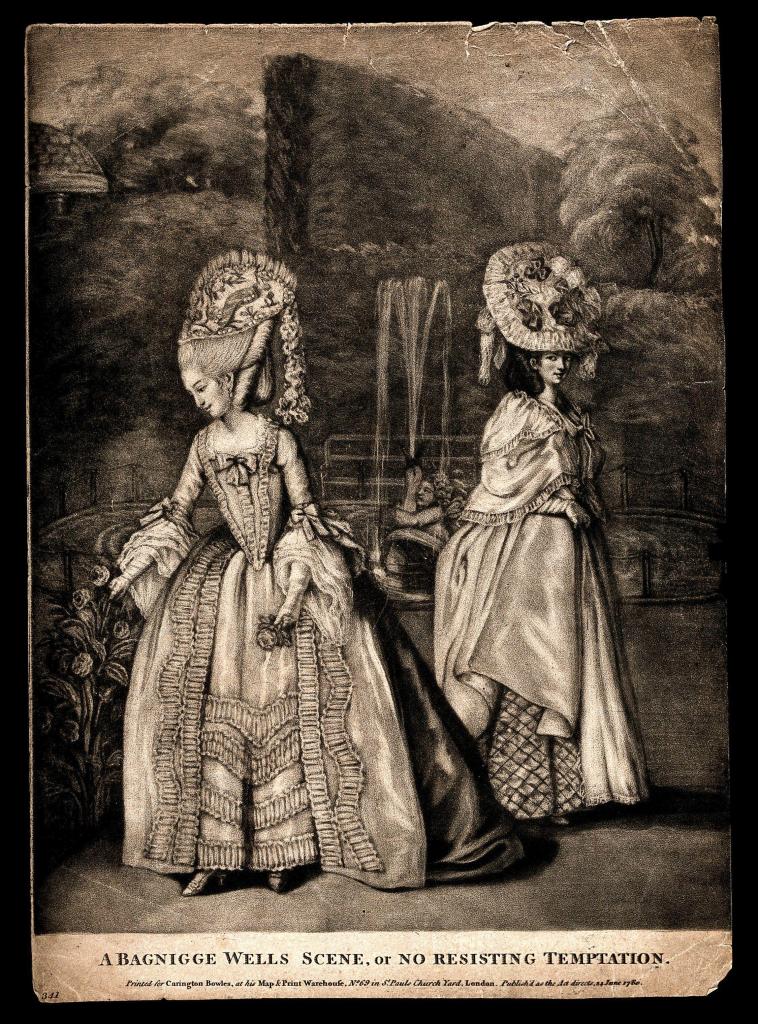
This contradiction reflects the gendered expectations of 18th-century sensibility. Women were often expected to demonstrate modesty, restraint and emotional sensitivity, while their appearances and sexual reputations remained subjects of public fascination. The distinction between virtue and vice was therefore not always applied equally. Women’s behavior could be interpreted as evidence of their moral character, even when the circumstances surrounding their actions were largely outside their control. This same tension appears in John Cleland’s Fanny Hill, where the titular character’s sexual experiences become central to how others might evaluate her identity.
Modern purity culture offers a particularly relevant comparison. Although it varies in presentation, purity culture frequently places responsibility for sexual morality on women, encouraging modesty and sexual restraint as indicators of personal worth. Jessica Valenti explores these expectations in The Purity Myth: How America’s Obsession with Virginity Is Hurting Young Women, examining how cultural ideas about virginity continue to influence women’s identities and opportunities. While the social and religious circumstances differ from those of the 18th century, the underlying expectation that women’s virtue can be measured through their sexuality remains familiar. For instance, modern purity rings impose celibacy, often with a religious reasoning or undertone of externally imposed morality.
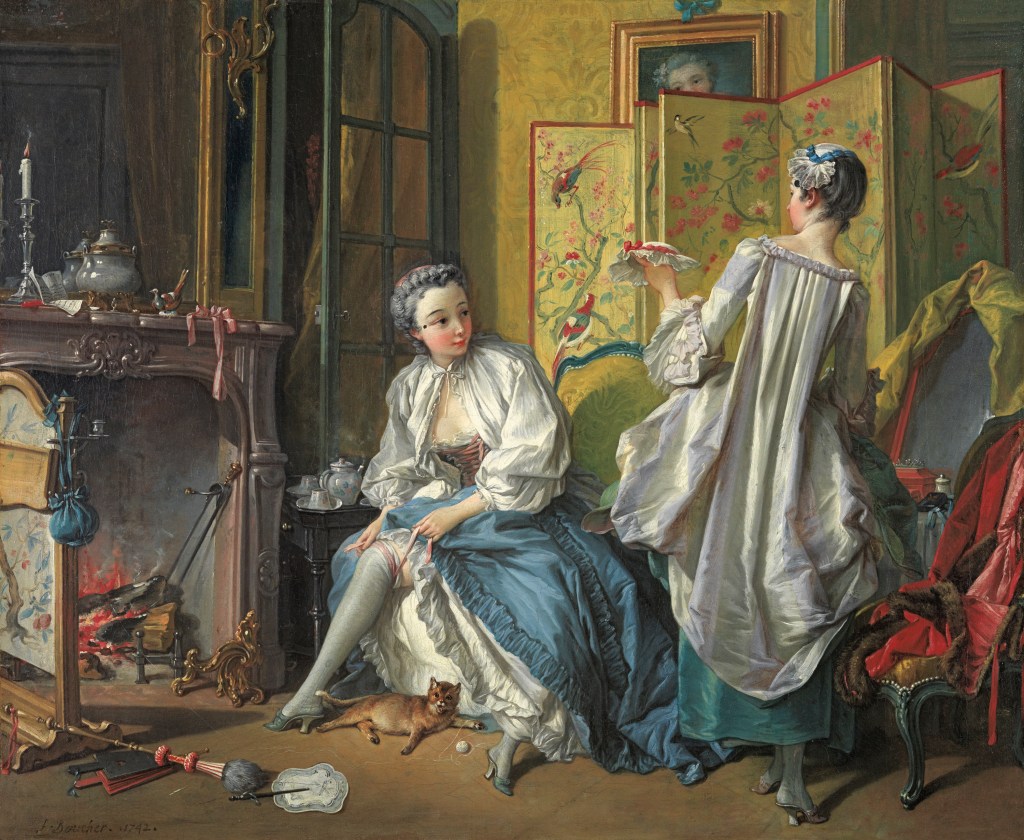
Fashion provides another interesting lens through which to examine these changing expectations. The Fashion Institute of Technology’s overview of 1740s fashion illustrates the elaborate silhouettes, structured garments and restrictive underpinnings associated with women’s dress during the period. Corsets, in particular, helped construct an idealized feminine figure that are reflected in contemporary expectations of beauty and presentation. Today, corsets have experienced a revival, appearing in contemporary fashion and even as popular Halloween costume pieces. Although their modern use is often an expression of personal style rather than social obligation, the garment’s changing significance demonstrates the capacity for femininity to be reclaimed and repurposed.
The distinction between the two periods is important. Modern women generally have greater freedom to define their relationships with sexuality, appearance and personal identity. Wearing a corset does not necessarily indicate an acceptance of traditional gender expectations, just as choosing sexual restraint does not automatically suggest an adherence to purity culture. The difference lies in the ability to make those decisions independently rather than having them imposed as requirements of the female experience.
Ultimately, the relationship between femininity and morality has always been dependent on the society in which it develops. The women depicted in 18th-century prints, the experiences of Fanny Hill and modern discussions surrounding purity culture all reveal the lasting influence of public judgement on women’s personal lives. What has changed is not necessarily the existence of these expectations, but the growing ability to question who established them in the first place.


Leave a Reply